
Two Soldiers (Lesson Plan)
Two soldiers in different wars wrote letters home that express powerful feelings of patriotism. As they wrote, each knew he was either dying or about to die.
Students will be able to:
- Use interpretation of documentary sources to analyze the two soldiers’ attitudes about their roles.
- Examine how the wars affected the lives of each man and his family.
- Examine how each man felt about his country.
- Define and discuss the meaning of patriotism.
- Become aware of the importance of archival collections
Students should read the two letters.
Strickland Letter Transcript
Dear Folks,
I’m writing this letter as my last one. You’ve probably already received word that I’m dead and that the government wishes to express its deepest regrets.
Believe me I didn’t want to die but I knew that it was part of the job. I want my country to live for billions and billions of years to come. I want it to stand as a light to all people oppressed and guide them to the same freedom we know. If we can stand and fight for freedom then I think we have done the job God set down for us. It's[sic] up to every American to fight for the freedom we hold so dear. If we don’t the smell of free air could become dank and damp as that of a prison cell. We won’t be able to look at ourselves in a mirror[,] much less at our sons and daughters, because we know we have failed our God, Country [sic], and our future generations.
I can hold my head high because I fought, whether it be in heaven or hell. Besides the saying goes [“]One more GI from Viet Nam [sic] St. Peter[,] I’ve served my time in Hell.[“]
I fought for Sandy, Nell, Gale[,] Mom, and Dad. But when the twins and Sandy’s kids get old enough they’ll probably have to fight too. Tell them to go proudly and without fear of death because it is worth keeping our land free.
I remember a story from Mr. Williams [sic] English classes when I was a Freshman. It said, “The cowards die a thousand times, the brave die but once.[“]
Don’t morn me mother for I’m happy I died fighting my countries[sic] enemies and I’ll live forever in peoples[sic] minds. I’ve done what I always dreamed of. Don’t morn me for I died a solider[sic] of the Uninted[sic] States of America.
God bless you all and take care. I’ll be seeing you in heaven.
Your loving son and brother
Butch
Col. Isaac E. Avery
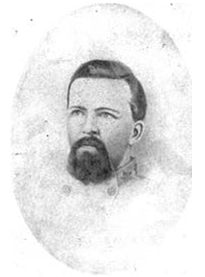
Col. Isaac E. Avery of the 6th NC troops commanded Hoke’s brigade when General Hoke was wounded at Chancellorsville. In July 1863 Avery led the attack on Cemetery Hill at Gettysburg. The only mounted man in the area, he was shot through the neck and shoulder. As he was dying he wrote a message to Major Samuel McDowell Tate. The message says, “Major. Tell my Father I died with my Face to the enemy. I. E. Avery.” His blood fell on the small piece of paper, donated by a family member, and now in the custody of the North Carolina State Archives. Colonel Avery died July 3, 1863.
Private First Class Butch Strickland
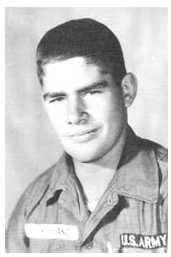
Private First Class Butch Strickland lived in Alamance County until he joined the U. S. Army. In the Vietnam War he was a member of the 2nd Battalion, 17th Field Artillery, B Battery. Strickland died in battle in the central highlands of South Vietnam on February 1, 1966 while attempting to aid a wounded comrade. His commanding officer sent the letter, found in his belongings, to Strickland’s parents. The letter was donated to the North Carolina State Archives by his parents, Mr. and Mrs. Donald A. Strickland. In 1967 the General Assembly of North Carolina issued a joint resolution honoring the life and memory of this courageous young man.
Students should read aloud the Avery letter and excerpts of the Strickland letter. The following questions should provoke discussion.
- What do the two men have in common?
- What are the obvious differences in the two soldiers?
- PFC Strickland had a premonition that he would die in the upcoming battle. Have you ever had a premonition about something that might happen?
- How did Col. Avery want his father to remember him?
- What does PFC Strickland say in his letter that indicates that he was proud to be an American?
- How did each man’s family feel about the letter of their loved one?
- Why do you think these letters were donated to the North Carolina State Archives?
- Students should expand their research by exploring the battles in which the men met their deaths.
- Students should research period newspapers for mention of the men’s deaths.
PC 1190, Isaac E. Avery Paper, North Carolina State Archives.
PC 1340, Hiram Strickland Papers, North Carolina State Archives.