
Civil Rights (Lesson Plan)
Civil Rights
Circle of Viewpoints


This lesson guide is made possible from funding by the National Historical Publications & Records Commission and the North Carolina State Historical Records Advisory Board.
Cover Images
Left to right:
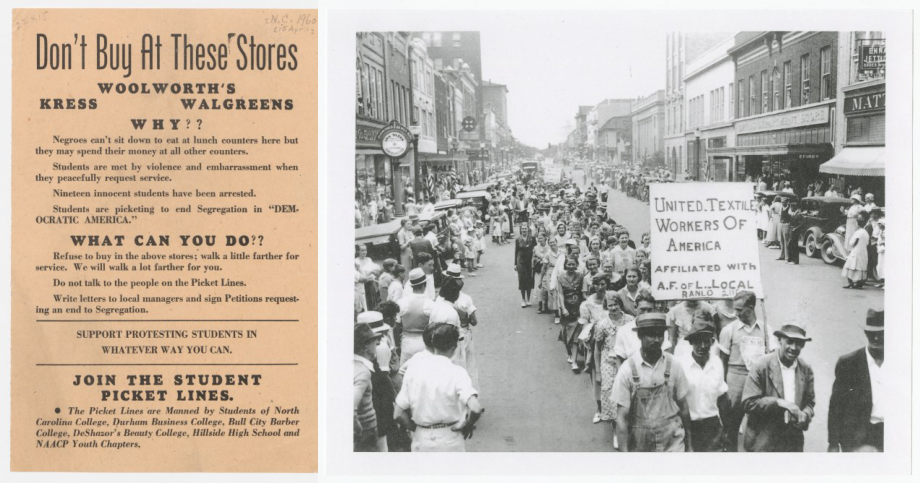
Broadside, “Don’t Buy at These Stores.” Duke University Libraries
Photograph, “Workers Marching, Gastonia, N.C.” Gaston Museum of Art & History
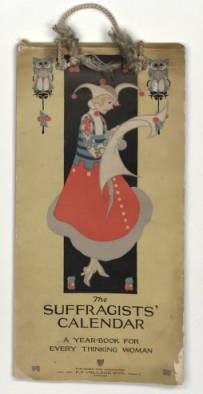
Calendar, 1916. Gertrude Weil Papers, State Archives of North Carolina
Circle of Viewpoints is a visible thinking teaching strategy developed as part of Harvard University’s Project Zero. It is designed to help students examine topics from multiple perspectives. This is an excellent way to engage students with primary source materials.
North Carolina Standards Addressed by this Exercise
AH1.H.1 and AH2.H.1 Apply the four interconnected dimensions of historical thinking to the American History Essential Standards in order to understand the creation and development of the United States over time.
AH1.H.1.3 Use Historical Analysis and Interpretation to:
1. Identify issues and problems in the past.
2. Consider multiple perspectives of various peoples in the past.
3. Analyze cause-and-effect relationships and multiple causation.
4. Evaluate competing historical narratives and debates among historians.
5. Evaluate the influence of the past on contemporary issues.
AH1.H.1.4 Use Historical Research to:
1. Formulate historical questions.
2. Obtain historical data from a variety of sources.
3. Support interpretations with historical evidence.
4. Construct analytical essays using historical evidence to support arguments.
AH1.H 4 and AH2.H.4 Analyze how conflict and compromise have shaped politics, economics and culture in the United States.
AH1&2.H.4.1 Analyze the political issues and conflicts that impacted the United States.
AH1&2.H.4.3 Analyze the social and religious conflicts, movements and reforms that impacted the United States.
Connection to C3 Framework:
D2. Civ.1.6-8. Distinguish the powers and responsibilities of citizens, political parties, interest groups, and the media in a variety of governmental and nongovernmental contexts.
D2. Civ.2.6-8. Explain specific roles played by citizens (such as voters, jurors, taxpayers, members of the armed forces, petitioners, protesters, and office-holders).
D2. His.6.6-8. Analyze how people’s perspectives influenced what information is available in the historical sources they created.
D3.1.6-8. Gather relevant information from multiple sources while using the origin, authority, structure, context, and corroborative value of the sources to guide the selection.
Documents Used—That Request Contributions from Citizens
The Digital Public Library of American includes many materials related to individual rights. For this exercise the document used is the Ku Klux Klan note.
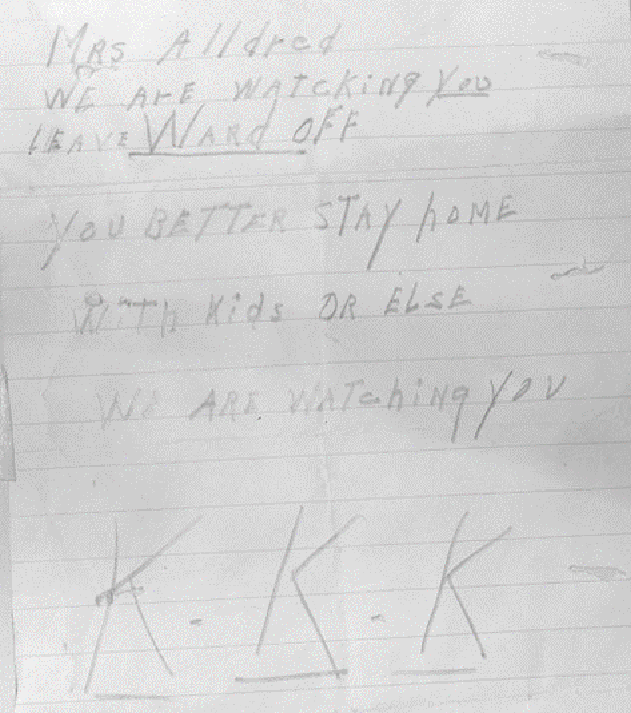
Image, “Ku Klux Klan note,” Joyner Library, East Carolina University.
To begin, make the document available to students by distributing copies or by displaying it for the group. The discussion can involve the entire class or small groups. Lead students through the following steps:
1. Discuss. In what kind of situation was the claim made? (Who made it? What were people’s interests and goals? What was at stake?)
To answer this, students first need to understand something about the context for the document. The best way to do that is to determine the date of the note. In this particular instance, the date is not apparent on the document itself. After having students evaluate the document, have them look at the information provided with the digital image. Ask if that helps them answer some of these questions. Once a date and source are established, a discussion of segregation and the KKK will help students put this in context. Additional discussion about the document itself may result in additional questions that cannot be answered by either the document or the information provided at the site. Have students consider if there are other ways to get answers to those questions and where they might find the resources.
2. Brainstorm. Make a list of all the different points of view from which your students could look at this claim.
Students will most likely begin with the obvious—Mrs. Alldred, the recipient of the note, and the children who are mentioned. Encourage them to expand to other possible viewpoints such as Mrs. Allred’s friends and neighbors, those in her social circle and those who did not consider her a friend, those who agree with the writer, or an objective observer from another state or country who sees a report about it in the newspaper. Allow students to be creative in identifying perspectives.
3. Dramatize. Choose a viewpoint to embody and imagine the stance a person from this do you have?
Students should choose one of the viewpoints identified in the previous step and be given time to think about that perspective. What would they think about the note? Is it believable? What reaction might they have to the note? Have students portray that viewpoint for the class. They can begin by saying:

4. Stand back. Step outside of the circle of viewpoints and take everything into account: What is your conclusion or stance, and what is it based upon? What new ideas or questions do you have?
This step allows students to draw conclusions about the document and its significance in history. Have them consider how reactions to this document today might be different than they were when it was produced. Have there been changes in attitudes since that time, and if so what are they? What has caused changes in attitudes? What responses might this document produce in today’s society?
Compelling question: what issues might produce a similar divergence of viewpoints today?
Optional:
There are graphic organizers available to use with this activity if you choose to do so. Here is one from the Rochester Community Schools.
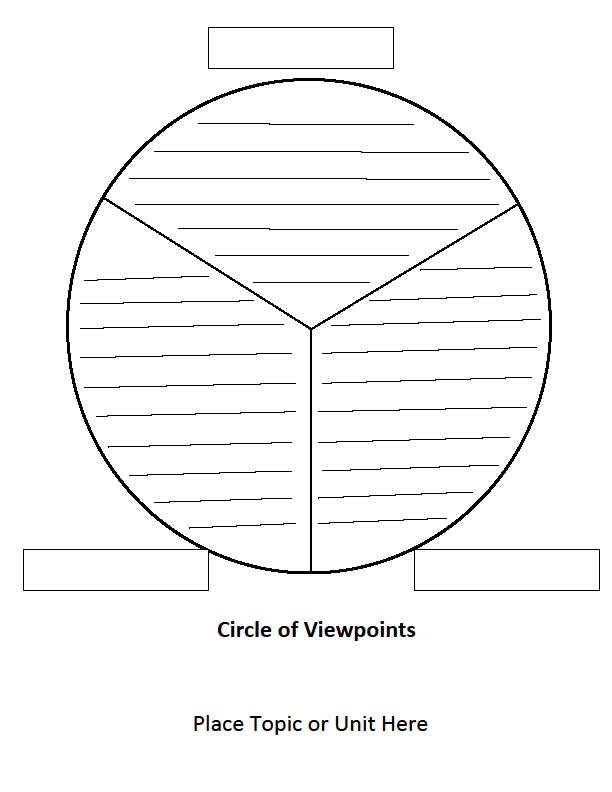
Circle of Viewpoints
Place Topic or Unit Here
Methods for Extension
Choose another document from the Civil Rights movement that offers a different perspective and have students repeat the exercise. For instance, students might read all or part of the sermon entitled "The Future of the Negro" by Rev. A. O. Steele.
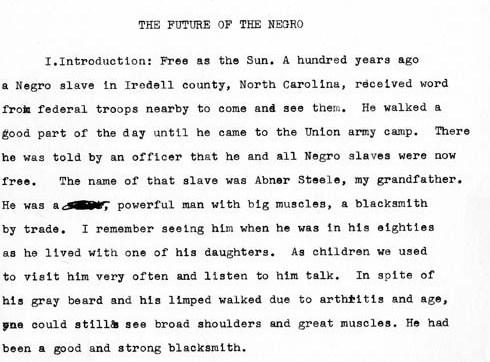
Sermon, “The Future of the Negro,” A.O. & Dorothy Steele Collection, Johnson C. Smith University.
Activity
Have students complete the exercise using documents related to other issues in history involving personal or property rights. Slavery and suffrage would be just two examples of such topics.